

Formula comparisons · Enzyme-focused formula
Haro Clear vs. VitreClear
Compare Haro Clear by Haro Health vs. VitreClear for their eye supplement formulas, enzyme amounts and daily routines. VitreClear lists bromelain, papain and ficin; Haro Clear combines bromelain and papain with five targeted micronutrients, lutein and zeaxanthin. Review the full daily dosage and cost, not just the capsule count.
Compare daily amounts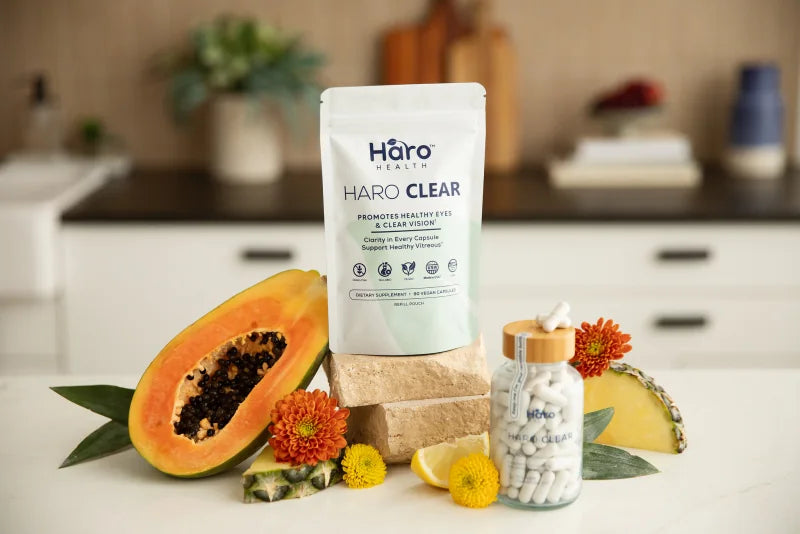
At a glance
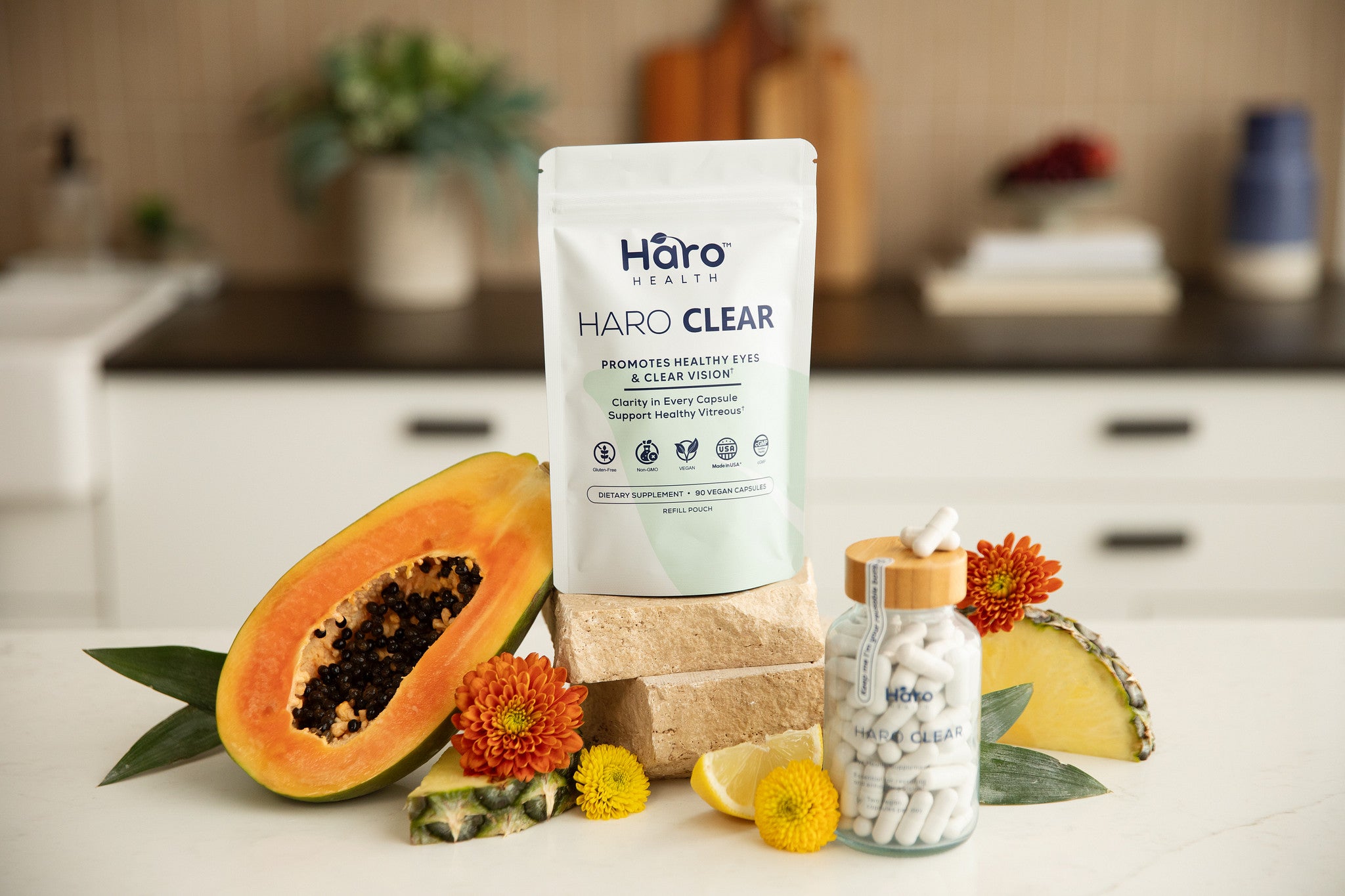
Nine ingredients. Three complementary groups.
Haro Clear
2 capsules daily with meals: one in the morning and one in the evening.
Haro Clear label and ingredients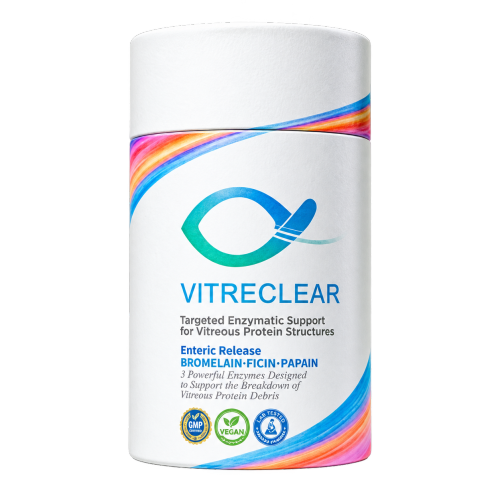
Enzyme-focused formula
VitreClear
Bottle label: 1–3 capsules daily with water, with fruit or on an empty stomach, ideally 2 hours away from protein-containing foods. Website guidance also describes 2 capsules daily.
Your formula, at a glance
Daily use, dietary suitability and cost
Compare the full daily routine, ingredient groups, dietary details and cost per day. Exact ingredient amounts follow below.
| Formula feature |  Haro Clear2 capsules daily Haro Clear2 capsules daily | VitreClear |
|---|---|---|
| Daily routineFollow the exact product label | 2 capsules with meals | Bottle label: 1–3 capsules daily with water, with fruit or on an empty stomach, ideally 2 hours away from protein-containing foods. Website guidance also describes 2 capsules daily. |
| Fruit enzymesNames in the reviewed ingredient statement | Bromelain and papain | Bromelain, papain and ficin |
| Enzyme amountsMilligrams per full day | 600 mg bromelain; 300 mg papain | 250–750 mg bromelain; 100–300 mg papain; 100–300 mg ficin |
| Formula approachBased on published bottle label | Micronutrients, enzymes and carotenoids | Enzyme-focused |
| Dietary suitabilityBased on the reviewed product version | Vegetarian HPMC capsule; labelled gluten-free and non-GMO | Label: 100% plant based, gluten-free and non-GMO; vegetable cellulose capsule |
| Ingredient considerationsIngredients to review if you have allergies; not an allergen-free guarantee | Bromelain (pineapple), papain (papaya), citrus and grape seed extracts | Bromelain (pineapple), papain (papaya) and ficin (fig) |
| Pack used for price comparisonOne pack; no subscription or bulk discount | 90-capsule refill pouch | 180 capsules |
| Days per packPack quantity ÷ full daily directions | 45 days | 60–180 days |
| One-time pack priceUSD before shipping and tax; checked October 7, 2026 | $39.95 USD | $49.99 USD |
| Cost per dayPack price ÷ days per pack; rounded to the nearest cent | $0.89/day | $0.28–$0.83/day |
Swipe to compare the formulas.
Based on the active ingredient statements reviewed. “Not listed” describes the label, not product quality. This chart compares formula features; it does not establish better symptom relief.
One-time purchase prices checked October 7, 2026. Haro Clear uses the 45-day refill price; the reusable bottle is sold separately in the Starter Kit. Competitor offer: VitreClear · single-bottle preorder. Single-bottle sale preorder price. Bottle directions allow 1–3 capsules daily; the website describes 2 daily, giving 90 days and $0.56/day at that routine. Availability is preorder. Prices can change. Shipping, tax, coupons, subscription and bulk discounts are excluded. Price does not indicate clinical effectiveness.
Ingredients and daily dosage comparison
Amounts follow each product’s stated daily routine. Extract forms and active components are shown where available.
| Ingredient | Haro Clear2 capsules daily | VitreClear |
|---|---|---|
| Vitamin C | 40 mg | Not listed |
| Zinc | 5 mg | Not listed |
| L-lysine | 130 mg (as L-lysine HCl) | Not listed |
| Grape seed extract | 30 mg; 95% proanthocyanidins | Not listed |
| Citrus-derived ingredient | 100 mg hesperidin from Citrus aurantium fruit extract | Not listed |
| Bromelain | 600 mg | 250–750 mg |
| Papain | 300 mg | 100–300 mg |
| Lutein | 4 mg | Not listed |
| Zeaxanthin | 4 mg | Not listed |
| Ficin | Not listed | 100–300 mg |
“Not listed” means absent from the reviewed active ingredient statement. An unpublished amount is unknown, not zero. More ingredients or a higher dose does not by itself show better results.
Research context
VitreClear: Research context
Haro Health states that Haro Clear has not been clinically tested as a complete formula. VitreClear’s reviewed bottle publishes 500 mg bromelain, 200 mg papain and 200 mg ficin per two capsules; Haro Clear publishes 600 mg bromelain and 300 mg papain per two capsules, alongside seven other nutrients. Ingredient overlap does not establish equivalent clinical outcomes or a head-to-head result.
Explore the study summariesHaro Clear vs. VitreClear: Comparison FAQs
How does Haro Clear’s focus differ from VitreClear?
VitreClear emphasizes bromelain, papain and ficin. Haro Clear combines two fruit enzymes with five micronutrients and two carotenoids.
How do the ingredient groups and formula breadth compare?
Haro Clear lists nine active ingredients: five micronutrients, two fruit enzymes and two retinal carotenoids. VitreClear: Three fruit enzymes: bromelain, papain and ficin. Formula breadth is a label difference, rather than proof of better results.
How do the fruit enzymes in Haro Clear and VitreClear compare?
Haro Clear lists 600 mg bromelain and 300 mg papain per two-capsule day. The VitreClear bottle publishes 500 mg bromelain, 200 mg papain and 200 mg ficin per two capsules. At its one-to-three-capsule daily instructions, these become 250–750 mg, 100–300 mg and 100–300 mg respectively. Its website also describes two daily capsules; use the supplied bottle’s instructions. Milligrams describe ingredient mass, not enzyme activity.
How do lutein and zeaxanthin compare between the formulas?
Haro Clear lists 4 mg lutein and 4 mg zeaxanthin daily. Lutein and zeaxanthin are not listed in the reviewed VitreClear active ingredient statement. Compare the whole formula rather than treating one ratio as proof of better results.
How do the daily vitamin C amounts compare?
Haro Clear lists 40 mg daily. Vitamin c is not listed in the reviewed VitreClear active ingredient statement.
How do the daily zinc amounts compare?
Haro Clear lists 5 mg daily. Zinc is not listed in the reviewed VitreClear active ingredient statement.
How do the daily L-lysine amounts compare?
Haro Clear lists 130 mg (as L-lysine HCl) daily. L-lysine is not listed in the reviewed VitreClear active ingredient statement.
How do the daily grape seed extract amounts compare?
Haro Clear lists 30 mg, standardized to 95% proanthocyanidins daily. Grape seed extract is not listed in the reviewed VitreClear active ingredient statement. Extract weight and the amount of an active component are different measurements; retain each label’s wording.
How do citrus-derived ingredients and their daily amounts compare?
Haro Clear lists 100 mg hesperidin from Citrus aurantium fruit extract daily. Citrus-derived ingredients are not listed in the reviewed VitreClear active ingredient statement. Extract weight and the amount of an active component are different measurements; retain each label’s wording.
Which ingredients appear in one formula but not the other?
VitreClear’s panel lists bromelain, papain and ficin as its three active enzymes, with vegetable cellulose as the other ingredient. Ficin is not listed in Haro Clear. Haro Clear lists vitamin C, zinc, lysine, grape seed extract, hesperidin, lutein and zeaxanthin alongside bromelain and papain; those seven nutrients are not listed in the reviewed VitreClear panel.
How do Haro Clear and VitreClear differ in daily capsule use?
Haro Clear specifies two capsules daily. VitreClear: Bottle label: 1–3 capsules daily with water, with fruit or on an empty stomach, ideally 2 hours away from protein-containing foods. Website guidance also describes 2 capsules daily. A capsule count alone does not establish an ingredient dose; compare a full day of use.
Do the products have different meal and timing instructions?
Haro Clear specifies one capsule with a morning meal and one with an evening meal. VitreClear’s bottle says one to three capsules daily, with fruit or on an empty stomach, ideally two hours away from protein-containing foods; its website also describes two daily capsules. Follow the instructions for the chosen product rather than transferring the other brand’s routine.
How does the research behind VitreClear compare with Haro Clear’s research context?
Haro Health states that Haro Clear has not been clinically tested as a complete formula. VitreClear’s reviewed bottle publishes 500 mg bromelain, 200 mg papain and 200 mg ficin per two capsules; Haro Clear publishes 600 mg bromelain and 300 mg papain per two capsules, alongside seven other nutrients. Ingredient overlap does not establish equivalent clinical outcomes or a head-to-head result.
How do vegan status and other dietary preferences compare?
Haro Clear uses a vegetarian HPMC capsule; Haro Health labels the product gluten-free and non-GMO. VitreClear’s bottle says 100% plant based, free from gluten and GMOs, and lists vegetable cellulose as the other ingredient. Assess each exact package against your preferences.
How should I compare the products’ testing information?
Haro Clear’s stated third-party checks cover ingredient content, heavy metals and microbiological quality. For VitreClear, compare the current manufacturer’s testing documentation, its scope and the product or batch covered. This comparison does not establish that VitreClear is untested or has lower quality.
How do manufacturing location and facility standards compare?
Haro Health states that Haro Clear is manufactured in Oklahoma City with imported and domestic ingredients, in an FDA-registered facility certified to NSF/ANSI 455-2 GMP. The reviewed VitreClear formula source does not document a comparable facility certification and location together. This is a limit of the material reviewed, not evidence of lower manufacturing quality. FDA registration is not FDA approval of a supplement.
How does Haro Clear’s refill packaging compare with VitreClear’s packaging?
Haro Clear offers a reusable glass bottle in its Starter Kit and sealed refill pouches for replenishment. Compare that system with the exact VitreClear package, its materials and any verified refill option. This page has not established a like-for-like environmental impact comparison.
How does the number of days supplied compare?
A 90-capsule Haro Clear refill supplies 45 days at two capsules daily. The reviewed VitreClear pack contains 180 capsules and supplies 60–180 days at its full daily directions. The bottle allows one to three daily capsules; the website describes two daily, giving 90 days. Compare a full day of use rather than package count alone.
How can I compare the daily cost of Haro Clear and VitreClear?
The 90-capsule Haro Clear refill costs $39.95 for 45 days at two capsules daily ($0.89/day). The reviewed VitreClear pack costs $49.99 for 60–180 days, giving $0.28–$0.83/day at its full daily directions. This is a preorder offer; at the website’s two-capsule routine, supply is 90 days and cost is $0.56/day. These are one-time USD prices checked October 7, 2026, excluding tax, shipping, coupons, subscriptions and bulk discounts. The Haro reusable bottle is purchased separately in the Starter Kit. Prices can change; cost does not establish clinical effectiveness.
Which product versions should I match before using this comparison?
The Haro Clear side uses its USA nine-ingredient label and two-capsule routine. The VitreClear side uses Manufacturer bottle label · 2-capsule serving · 1–3 capsules daily. Check both exact packages for changes; earlier formulas or versions sold in another market may differ.
Is Haro Health vs. VitreClear the same comparison as Haro Clear vs. VitreClear?
Yes, when “Haro Health” refers to its Haro Clear supplement. Haro Health is the brand and Haro Clear is the product compared here with VitreClear. This page compares Haro Clear’s USA label with the competitor version identified in the source notes, using each stated daily routine. Other products from either brand, and versions sold in other countries, should be checked separately.
Haro Clear
Why choose Haro Clear?
A thoughtful formula, careful manufacturing and a refill routine designed for everyday use.
Made in the USA
Manufactured in Oklahoma City with imported and domestic ingredients.
Third-party lab tested
Checked for ingredient content, heavy metals and microbiological quality.
Certified manufacturing
Made in an FDA-registered facility certified to the NSF/ANSI 455-2 GMP standard.
Vegetarian capsules
Vegetarian HPMC capsule shell; gluten-free and non-GMO, as stated by Haro Health.
Keep the bottle. Refill your routine.
The Starter Kit includes a reusable glass bottle. Replenish it with sealed refill pouches.
Three ingredient groups
Nine ingredients across fruit enzymes, targeted micronutrients and retinal carotenoids.
Sources and product versions
Reviewed October 7, 2026 · Prepared by Haro Health
Manufacturer gallery label reviewed October 7, 2026. Supplement Facts are per 2 capsules: bromelain 500 mg, papain 200 mg and ficin 200 mg. The table normalizes these to the bottle’s 1–3-capsule daily instructions. The website also describes 2 capsules daily, so check the supplied bottle. Enzyme activity entries use different units and are not treated as equivalent activity.
- Haro Clear label and ingredients
- VitreClear: Reviewed ingredient statement (opens in a new tab)
- Explore the study summaries
Product image: VitreClear product website (opens in a new tab). © respective image copyright owner. Shown to identify the product compared.
Price and supply sources: Haro Clear 45-day refill · VitreClear · single-bottle preorder (opens in a new tab)
Prepared by Haro Health, which sells Haro Clear. This factual comparison uses a consistent format and the published product information cited above; it is not an independent review or a head-to-head clinical trial. Haro Health is not affiliated with, sponsored by or endorsed by the other brands or companies mentioned. Third-party product names, company names, logos, trademarks and registered trademarks belong to their respective owners and are used solely to identify the products compared. Product photographs and packaging artwork remain the property of their respective copyright owners. Formulas and packaging may change; the version reviewed is identified above.